CASE STUDY · AUG 1, 2026
A Franka Panda, from task description to evaluated policy
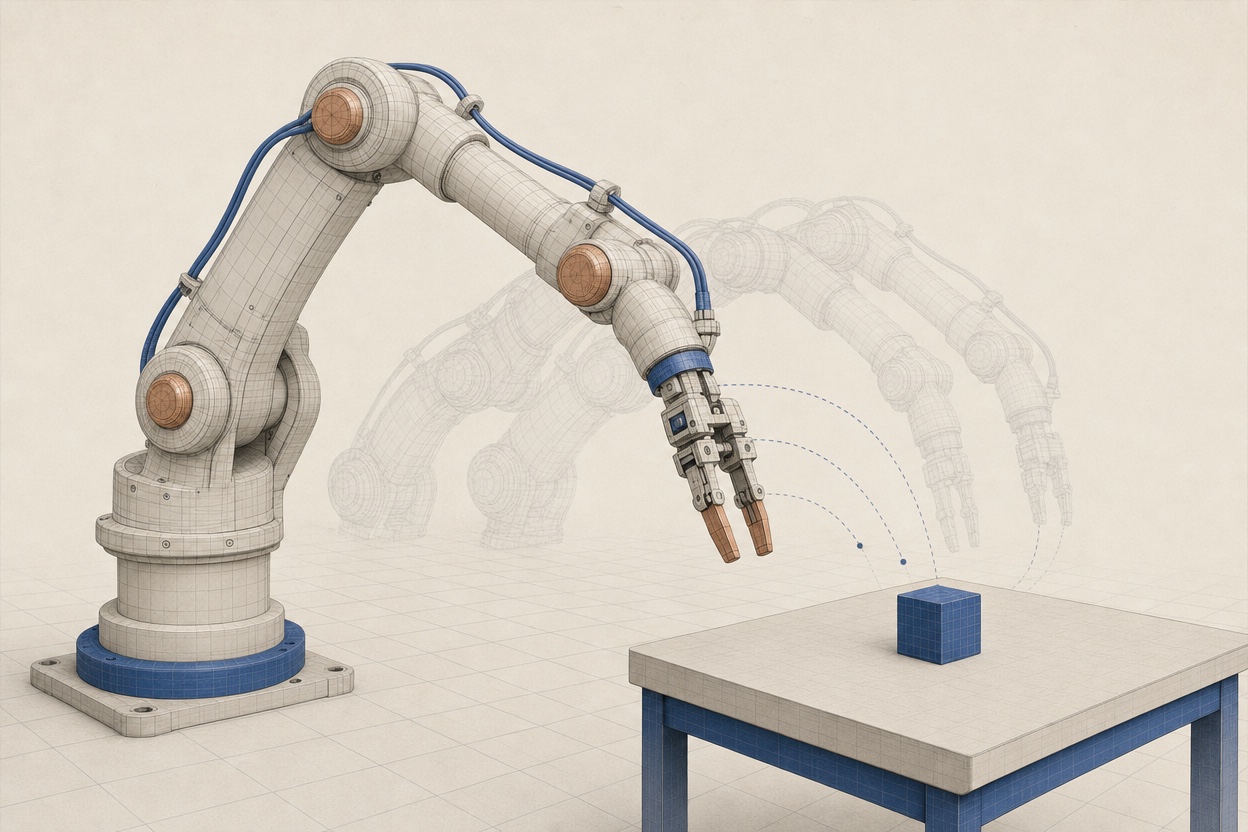
A seven-axis robot arm trained end to end inside the gym — scenes assembled, rewards written, policies trained and gated, all in simulation first.
The Franka Panda is the workhorse of manipulation research: seven axes, a parallel gripper, and a task family — reach, grasp, place — that every lab rebuilds scaffolding for from scratch.
Inside the gym, the scaffolding is the product. The task goes in as a specification: observations, actions, constraints, and a learning signal with the tests that catch it being gamed. The loop assembles the scenes, randomizes them, trains across parallel simulated environments, and scores every candidate policy against the success criteria before any of them would be trusted near hardware.
What comes out is the full artifact set — the policies, the evaluations that judged them, and the lineage of every experiment including the failed ones. Each piece becomes parts for the next task.
A detailed write-up, with training curves and evaluation gates, is in progress.